
 |
Course Description
The
course begins with a survey and analysis of Medieval politics and social
structures including the business practices and the guild system,
feudalism, land policies, demographic shifts giving rise to towns and a
new middle class of small businessmen, money lending and apparent
changes in teachings regarding and related changes in business
practices. We also examine
the relationship of political and economic change to religious forces
connected to the Reformation, the rise of modern descriptive politics
beginning with Machiavelli, which contributed to a new understanding of
virtue, the ends of government, and the purpose of politics.
A
more detailed study of Social Contract Theory and its relationship to
the French and American Revolutions, the rise of liberal capitalism and
its relationship follow this survey to democracy and Protestantism and
other factors that contributed to the dissolution of the Medieval
synthesis.
We
then proceed to study contemporary ideologies such as libertarianism,
liberalism, conservatism, Marxism-Leninism, Nazism, Socialism, and
Feminism which were all reactions is one way or another to economic and
political changes associated with the Industrial Revolution.
The
course culminates with a study of papal social teaching beginning with
Pope Leo XIII’s Rerum Novarum and continuing through to the
pontificate of Pope John Paul II. We
examine classical philosophical answers to economic and political
questions regarding the best types of government and the relationship of
ethics to economics and economic justice. Understanding and insight into complex social questions regarding
political and economic structures and restructuring is increased by
recourse to theological principles relative to economic and political
justice. We also examine
the relationship between church and society, the eclipse of liberalism
and socialism and the birth of solidarity and alternative social and
political models for the 21st century based upon
understanding and application of political theory learned from Classical
Antiquity, from the Scholastic Era, from Sacred Scripture and from
modern Papal Social teaching.

|
 |
 |
 |
 |
 |
 |
 |
 |
TOPIC
1: CHRISTENDOM
Topic I: Lecture I. Feudalism
Lecture I Online Test
Topic I: Lecture II. Feudalism continued
Lecture II Online Test
Topic I: Lecture III. Usury
Lecture III Online Test
Topic I: Lecture IV. St. Thomas Aquinas I: Introduction to
Politics
Lecture IV Online Test
Topic I: Lecture V. St. Thomas Aquinas II: Plenitudo
Potestatis
Lecture V Online Test |
|
 |
Readings for Topic One:
Aquinas’
Treatise
on Law
Pope
Benedict XIV
Vix
Prevenit (On Ususry) |
 |
 |
TOPIC 2:
FALL OF THE MEDIEVAL SYNTHESIS
Machiavelli, Protestant Reformation, Economic Changes, Age of
Discovery
Lecture I Online Test
|
|
 |
Reading for Topic Two:
Machiavelli:
The
Prince
John Calvin
On
Civil Government and Resistance
Excerpts
from Institutes of Christian Religion
Martin Luther
Address
to the German Nobility
The
95 Theses
The
Freedom of a Christian
The
Jews and Their Lies
Let
Your Sins be Strong
The
Small Catechism |
 |
 |
TOPIC 3:
ABSOLUTISM AND CONTRACT THEORY
Social
Contract Theory: Hobbes,
Locke Rousseau
Lecture I Online Test
|
|
 |
Reading for Topic Three:
Hobbes:
Leviathan
Rousseau:
Social Contract
Locke
A
Letter Concerning Toleration
Second
Treatise on Civil Government
Locke's
Farewell
Bossuet
Treatise
on Divine Right
King Henry VIII
The Act of
Supremacy
English Parliament (William and Mary and Eclipse
by Parliament)
Declaration of Right |
 |
 |
TOPIC 4:
THE ENLIGHTENMENT, ABSOLUTISM, CONSERVATISM AND CATHOLIC SOCIAL TEACHING
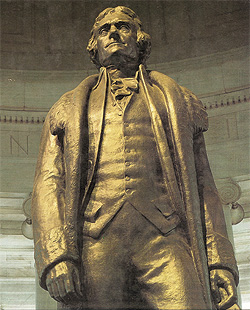
The Natural Law, Jefferson, Deism, French Rev. Democracy,
Popular Sovereignty, American Revolution, US and Polish Constitutions,
Adam Smith, Physiocrats and Mercantilists
Lecture I Online Test


|
|
 |
Readings
for Topic Four:
Polish
Constitution of May 3, 1781
Preamble
to United States Constitution
Voltaire
Voltaire's
Dictionary
Catherine the Great
On
the Enlightenment
Montesquieu
Spirit
of Laws
D'Alembert
Discourse
Encyclopedia
Condorcet
The
Future Progress of the Human Mind
Thomas Jefferson
The
Jeffersonian Bible
Jonathan Swift
The
Abolition of Christianity
French National Assembly
Decree
Abolishing the Feudal System
Civil
Constitution of the Clergy
Pope Pius VI (April 13, 1791)
On
The Civil Constitution of the Clergy
French National Convention
Meeting
of September 21, 1792
Various French Documents
The
Revolution of 1848 (Napoleon)
Absolutism
Frederick
II
Essay
on the Forms of Government
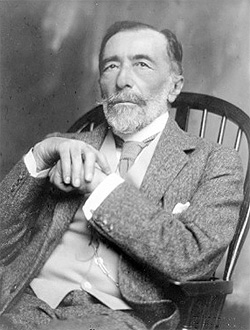
Joseph
Conrad
Heart
of Darkness
Conservatism
Von-Metternich
Political
Confess Faith
Wardsworth
Tin
tern Abby
Edmund Burke
Reflections
on the French Revolution: Thoughts
on Present Discontent and Various Speeches
Catholic
Social Teaching
Pope
Leo XIII (July
19, 1881)
Diuturnum:
The Origin of Civil Power
Pope Leo XIII (November 1, 1885)
Immortale
Dei: On the Christian Constitution of States
Pope Leo XIII (January 18, 1901)
Graves
de Communi Re: On Christian Democracy |
 |
 |
TOPIC
5:
INDUSTRIAL REVOLUTION LIBERALISM AND CATHOLIC SOCIAL TEACHING
Classical
Liberalism, Industrial Revolution, Laisse Faire, Spencer and Social
Darwinism
Lecture I Online Test

|
|
 |
Readings
for Topic Five:
Pope Leo XIII (May 15, 1891)
Rerum
Novarum: On Capital and Labor
Engels
Industrial
Manchester
Franz
German
Banking
Cloth Merchants of Leeds
Leeds-
Cloth Merchants Letter
Cloth Workers of Leeds
Leeds-
Woolen Workers Petition
Robinson
Mill
Girls
Ure
Philosophy
of Manufacture
Liberal
Tradition
Susan
B. Anthony
Women's
Right to Vote
Malthus Population
Mill Liberalism
Sanger Autobiography
Adam Smith Wealth of Nations
Charles Darwin Origin
of Species
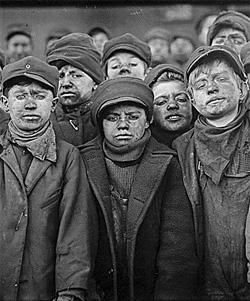
Charles Dickens
Hard
Times (Chapter 2: Murdering the Innocents) |
 |
 |
TOPIC 6:
SOCIALISM AND CATHOLIC SOCIAL TEACHING
Democratic Socialism, Utopian Socialists, Democratic Socialism, Reform Liberalism, Progressivism, Populism, Great
Society, Fascism, Progress
Lecture I Online Test |
|
 |
Readings
for Topic Six:
Pope Pius XI (May 15, 1931)
Quadragesimo
Anno: On Reconstruction of the Social Order
Pope John XXIII (May 15, 1961)
Mater
et Magistra
Pope John XXIII (April 11,
1963)
Pacem
et Terris
Pope Paul VI (March 26, 1967)
Populorum Progression: On the
Development of Peoples |
 |
 |
TOPIC
7
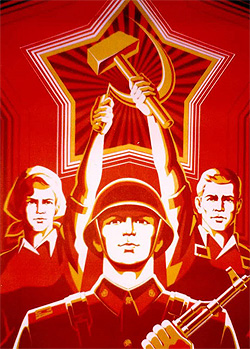
MARXISM-COMMUNISM AND CATHOLIC SOCIAL TEACHING
Rise of
Marxism, Russian Revolution, Marxism-LeninismMarxist Social and Political Philosophy
Lecture I Online Test
|
|
 |
Readings for Topic Seven:
Karl
Marx
The Communist Manifesto
Interview
With Marx
The
Eighteenth Brumaire of Louis Bonaparte
Frederick
Engels
The
History of Early Christianity
Pope
Pius XI (March 19, 1937)
Divini
Redemptoris, On Atheistic Communism
Lenin
Call
to Power
State
and Revolution
Testament
What
is to be Done
Stalin
Purges |
 |
 |
TOPIC 8:
NEW AGE POLITICS
AND CATHOLIC SOCIAL TEACHING
Future of Ideology Liberation Ideologies and Feminism, Liberation
Ideologies,
Post Communism and Globalism/Internationalism
Lecture I Online Test
|
|
 |
Readings
Topic Eight:
Pope John Paul II (December 30, 1987)
Solicitudo
Rei Socialis, On the Social Teaching of the Church
Pope
John Paul II (May 1, 1991)
Centesimus
Annus, Hundredth
Anniversary of Rurum Novarum
Pope Benedict XVI
Caritas in Veritate
|
| |
|